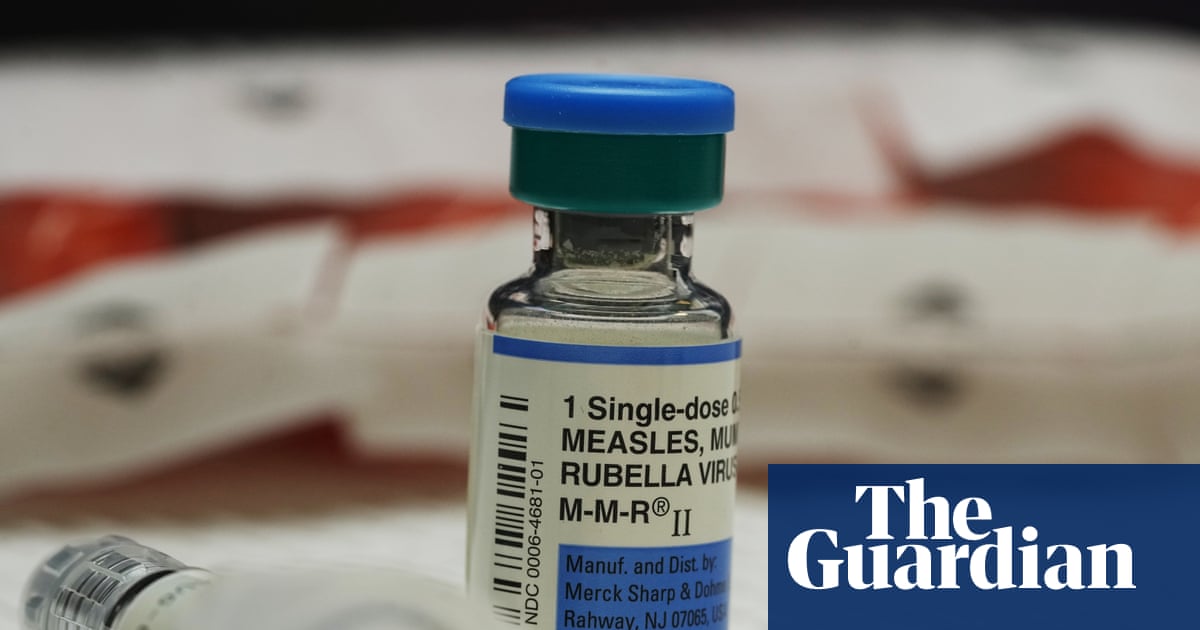
Federal health authorities logged 178 additional measles cases in the United States this week, according to The Guardian, as the vaccine-preventable disease spreads through at least 43 separate outbreaks.
The Centers for Disease Control and Prevention (CDC) counted 4,588 confirmed cases nationwide for 2026 as of Friday, The Guardian reports — more than twice the figure recorded for all of 2025. Pennsylvania alone accounted for 1,338 cases on the same day, and the CDC also listed sizable outbreaks in South Carolina and Utah, each above 500 cases.
Why it matters
Measles is among the most contagious diseases known, and its costs are well documented. Roughly one in five unvaccinated people who catch it ends up in hospital, and between one and three in every 1,000 die from complications. The measles vaccine, by contrast, prevents the disease in about 97% of those who receive it; side effects are typically limited to soreness at the injection site and a mild fever.
The current figures place 2026 well beyond last year's total, and the outbreak has now produced fatalities. Pennsylvania authorities have recorded five deaths linked to measles and are looking into a possible sixth. The CDC has acknowledged three measles deaths nationally but has declined to identify where the third occurred, leaving unclear whether it reflects a Pennsylvania case or one from another state.
Death tally questioned as reporting rules change
The agency's handling of death data has drawn scrutiny. Reuters reported that Health Secretary Robert F. Kennedy Jr. asked senior CDC officials in September to strike a measles death from the official count after raising doubts about whether measles played a role in that person's death, according to The Guardian.
Critics have also faulted the agency for what they describe as a lack of transparency, The Guardian reports. Separately this week, the Department of Health and Human Services announced revisions to the system used to report suspected vaccine injuries. Under the proposal, physicians would be able to bill for submitting such reports, among other adjustments.
That system, known as VAERS, has long been a focus of anti-vaccine campaigning. Researchers have used it to spot rare safety signals, while activists have cited it to support claims about vaccine danger that are not borne out by the evidence. Vaccinologists acknowledge that all vaccines carry some risk.
Before Kennedy took the helm of the health department, an expert panel reviewed each vaccine change on its own merits to weigh benefits against risks. Kennedy dismissed all 17 sitting members of that panel and installed replacements aligned with his views; a court blocked those appointments in March.
During his tenure, The Guardian notes, Kennedy has made a series of contested statements — asserting that children receive more than 90 vaccine doses, drawing a link between vaccines and autism despite extensive evidence to the contrary, directing the CDC to strip language stating vaccines do not cause autism from its website, and claiming the measles, mumps and rubella shot contains "aborted fetal debris." He has also said vitamin A and cod liver oil may benefit children with measles, a position leading physicians have called misleading.
What to watch
Attention now turns to whether the weekly case count keeps climbing and whether the CDC clarifies the location of the third reported death.